10 Days of Financial Management Awareness — Day 5
Life is unpredictable.
You can carefully plan your monthly expenses, follow a budget, and consistently save money, but unexpected situations can still happen.
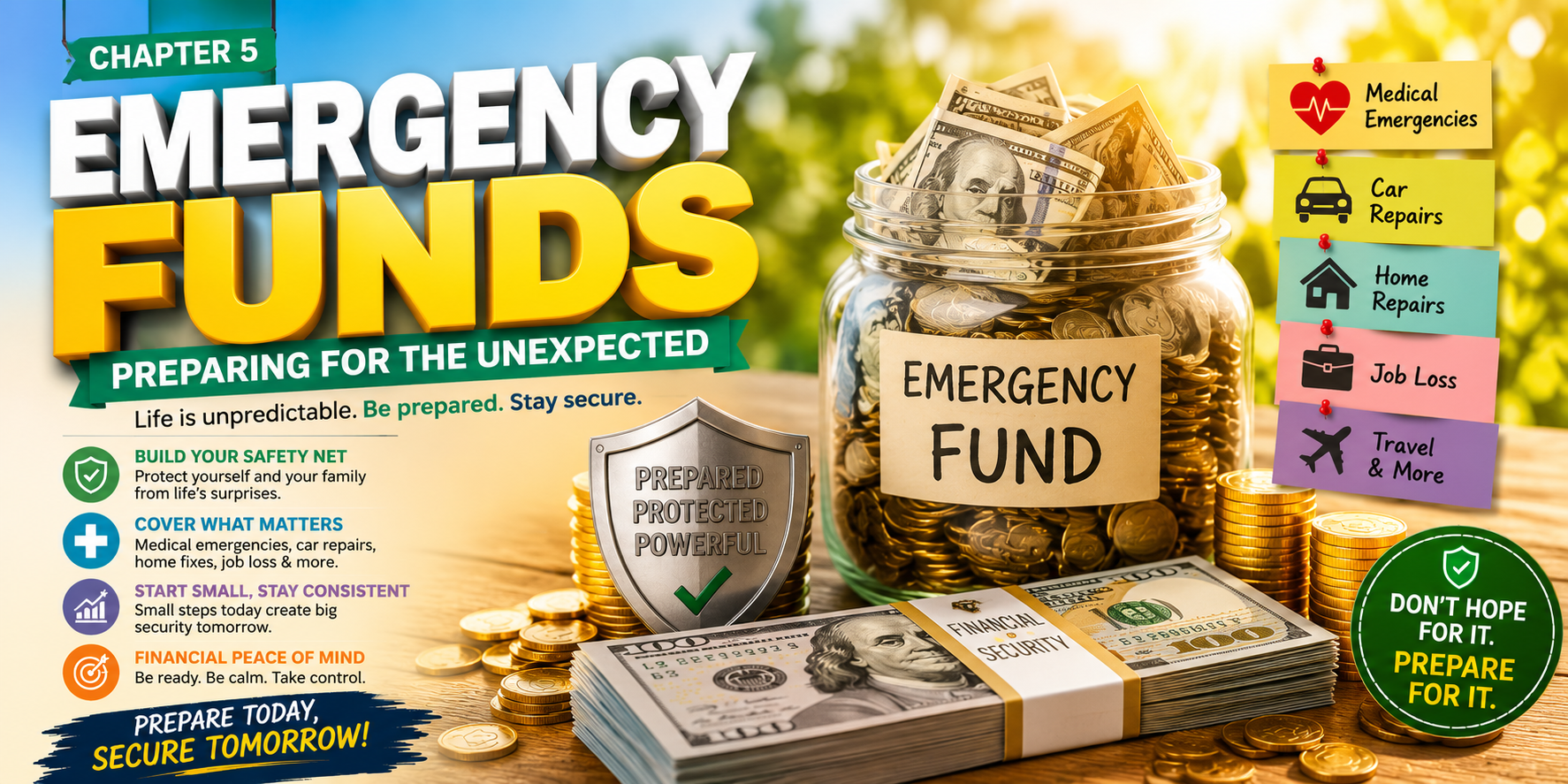
A medical emergency, sudden job loss, urgent travel, car repairs, household repairs, or unexpected bills can disrupt even the best financial plans.
This is where an emergency fund becomes important.
An emergency fund is money set aside specifically to help you deal with unexpected financial situations without completely disrupting your life or forcing you into unnecessary debt.
What Is an Emergency Fund?
An emergency fund is a reserve of money that is only used for genuine emergencies.
It acts as a financial safety net when something unexpected happens.
For example, imagine your phone suddenly stops working and you depend on it for work or communication. Without emergency savings, you may be forced to borrow money or take money meant for rent, food, or other essential needs.
With an emergency fund, you have a financial cushion to help manage the situation.
The purpose is not to eliminate every financial problem. It is to give you time and options when unexpected challenges arise.
Why an Emergency Fund Matters
Without emergency savings, unexpected expenses often lead to borrowing.
Borrowing is not always bad, but relying on debt for every emergency can create a difficult financial cycle.
For example:
Unexpected expense ? Borrow money ? Repay debt ? Less money available ? Another emergency ? Borrow again
Over time, this cycle can become stressful and expensive.
An emergency fund helps break that pattern.
It gives you the ability to respond to unexpected situations using money you have already prepared rather than immediately depending on loans, friends, family, or expensive credit.
What Counts as an Emergency?
One of the biggest challenges is deciding what qualifies as an emergency.
A genuine emergency could include:
- Unexpected medical expenses.
- Urgent home repairs.
- Essential vehicle repairs.
- Sudden loss of income.
- Emergency travel.
- Urgent family situations.
- Critical replacement of an item necessary for work or daily life.
However, an emergency fund should generally not be used for:
- Planned vacations.
- Impulse shopping.
- Entertainment.
- Expensive gadgets you simply want.
- Regular monthly expenses you knew were coming.
- Unplanned celebrations.
A useful question to ask yourself is:
“Is this unexpected, urgent, and necessary?”
If the answer is yes, it may qualify as an emergency.
How Much Should You Save?
There is no single amount that works for everyone.
The right emergency fund depends on your income, responsibilities, lifestyle, and financial situation.
Many financial experts recommend building enough savings to cover several months of essential expenses. However, this can feel overwhelming when you are just starting.
Don't focus only on the final target.
Start with a smaller goal.
For example:
- First goal: KSh 5,000
- Next goal: KSh 10,000
- Then: One month of essential expenses
- Eventually: Several months of essential expenses
Building an emergency fund is a process.
You do not have to achieve the final amount immediately.
Start Small and Build Gradually
A common mistake is thinking:
“I cannot afford to build an emergency fund because I don't earn enough.”
But waiting until your income becomes perfect may mean never starting.
Instead, begin with what is realistic.
You could save:
- KSh 50 per day.
- KSh 100 per day.
- KSh 500 per week.
- A small percentage of every income you receive.
Small contributions may not seem powerful at first, but consistency creates progress.
The most important step is creating the habit of preparing for the unexpected.
Keep Emergency Money Separate
Your emergency fund should ideally be separate from your everyday spending money.
If emergency savings are kept in the same place as money used for daily expenses, it can be tempting to spend them.
Consider keeping a clear distinction between:
Everyday money — for regular expenses.
Goal savings — for specific plans.
Emergency savings — for unexpected situations.
This makes it easier to protect your emergency fund from unnecessary withdrawals.
Rebuild After Using It
An emergency fund is meant to be used when a genuine emergency happens.
Do not feel guilty for using it for its intended purpose.
However, once the emergency has passed, make rebuilding the fund a priority.
For example, if you had KSh 20,000 saved and used KSh 8,000 for an emergency, create a plan to gradually restore the amount.
Think of your emergency fund as a financial safety net that needs maintenance.
Don't Wait for a Crisis
The best time to prepare for an emergency is before it happens.
Unfortunately, emergencies rarely give advance notice.
That is why financial preparation is important.
Saving money during stable periods can make difficult periods easier to manage.
You may not be able to predict every problem, but you can improve your ability to respond to one.
Today's Financial Challenge
Start your emergency fund today.
Write down:
My emergency fund goal: KSh __________
My first savings target: KSh __________
Amount I can contribute regularly: KSh __________
Then make your first contribution.
It does not matter if the amount is small.
What matters is taking the first step.
The Key Lesson
An emergency fund is more than money sitting unused.
It represents preparation, security, and financial resilience.
You cannot always control what happens in life.
But you can prepare yourself financially to handle unexpected challenges with greater confidence.
A financial emergency becomes less frightening when you have already prepared for it.
Start small. Stay consistent. Build your safety net.
Tomorrow: Chapter 6 — Debt: The Good, The Bad and The Dangerous.
#FinancialManagement #FinancialLiteracy #EmergencyFund #PersonalFinance #MoneyManagement #FinancialSecurity #SavingMoney #FinancialAwareness



💬 Discussion (0)
No comments yet. Be the first to share your thoughts!
Leave a Response